.png)
How You can Unlock Hidden Business Value: Using LLMs and RAG to Transform Data Into Insights
Data determines a company's success. However many businesses struggle to use data effectively. Enter large language models (LLMs) and Retrieval Augmented Generation (RAG). These two technologies are changing how companies extract valuable insights from their data.
The Problem with Scattered and Unused Data
Businesses often have data dispersed across various departments and systems, creating data silos. These silos make it challenging to see the bigger picture, hiding valuable patterns and trends. A survey by NewVantage Partners revealed that only 24% of organizations consider themselves data-driven.
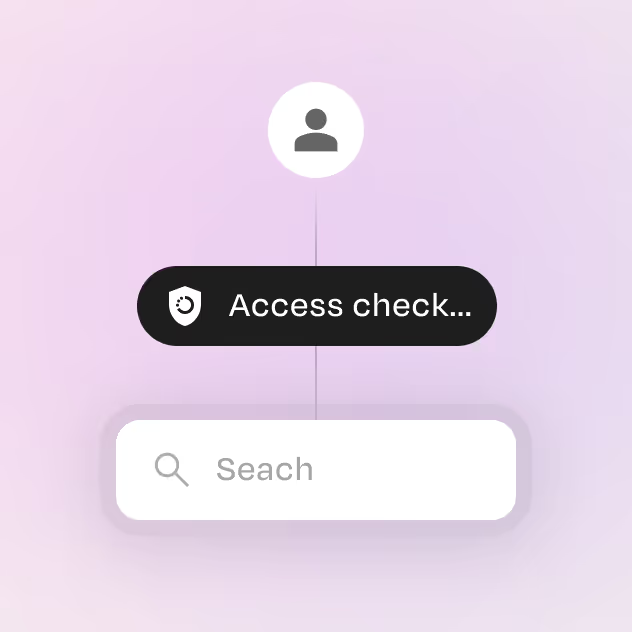
Common barriers to data accessibility include lack of tools and technology, data fragmentation across various departments and formats, a shortage of data scientists and analysts, and data governance and security concerns that balance accessibility with privacy requirements.
LLMs and RAG for Business Research
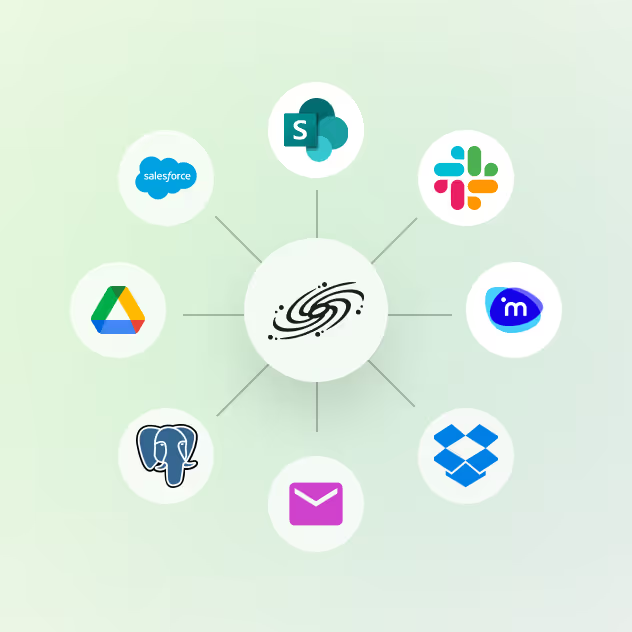
LLMs can uncover hidden connections and patterns by ingesting and understanding information from disparate sources. When combined with RAG techniques, LLMs can tap into real-time data across various systems, providing a unified view of previously siloed information and enabling organizations to derive actionable insights.
RAG enhances LLMs by integrating them with systems that quickly find relevant information. This combination allows LLMs to access and use real-time data from various sources like company databases, research reports, and news articles, providing more accurate and valuable responses.
How They Can Be Used
LLMs and RAG offer numerous applications in business research including analyzing markets and competitors to identify new opportunities, understanding customer sentiments from reviews and social media, predicting future trends by identifying patterns in past data, identifying and managing risks by scanning internal and external information, and organizing and sharing knowledge by efficiently sorting and summarizing vast amounts of information.
Future Trends: Co-Pilots and AI Agents
AI co-pilots and agents are reshaping the future of business research, offering personalized insights tailored to individual users. SWIRL Co-Pilot empowers users with natural language interaction, enabling them to ask questions, summarize findings, and delve deeper into data specifics. These tools streamline workflows by automating repetitive tasks like data collection, analysis, and report generation.