.png)
Understanding Metasearch: A Comprehensive Guide

Introduction
Finding the correct information in the vast internet landscape can sometimes feel like searching for a needle in a haystack. This is where metasearch engines come into play, offering a powerful solution to streamline the search process. But what exactly is metasearch, and how does it work? This article will delve deep into metasearch engines, exploring their functionality, benefits, and impact on the digital landscape.
Metasearch, at its core, is a search methodology that involves querying multiple search engines simultaneously and aggregating the results into a single, comprehensive list. This approach emerged in the early days of the internet as a way to overcome the limitations of individual search engines and provide users with a more complete view of available information.
A Little History of Metasearch Engines
The history of metasearch engines dates back to the mid-1990s, with early players like MetaCrawler and Dogpile paving the way for this innovative search technology. As the internet grew exponentially, so did the need for more efficient ways to navigate its vast resources. Metasearch engines evolved to meet this demand, offering users a one-stop solution for their diverse search needs.
Metasearch engines have become increasingly relevant in today’s digital age, where information overload is a constant challenge. They are valuable tools for users seeking comprehensive results, time efficiency, and a broader perspective on any given topic. Whether planning a trip, conducting academic research, or simply trying to find the best deal on a product, metasearch engines can significantly enhance your online search experience.
What is a Metasearch Engine
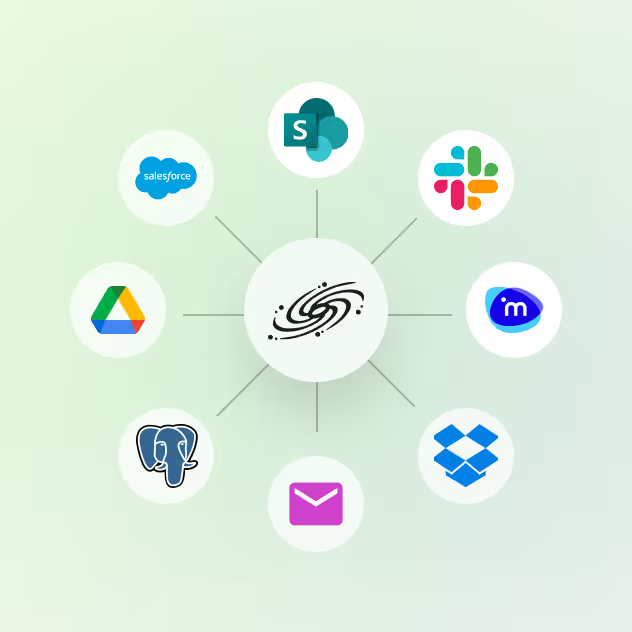
A metasearch engine is a sophisticated tool that doesn’t maintain its database of web pages. Instead, it acts as an intermediary, sending user queries to multiple search engines and other databases and then compiling and presenting the results in a unified format. This approach allows users to access a broader range of information without the need to visit multiple search engines individually.
Compared to traditional search engines like Google or Bing, metasearch engines offer a distinct advantage regarding the breadth and diversity of results. While a conventional search engine crawls and indexes web pages to create its database, a metasearch engine leverages the strengths of multiple search engines to provide a more comprehensive overview of available information.
Critical features of metasearch engines include:
These features combine to create a powerful search tool that can save time and provide users with a more complete picture of the information landscape.
How Metasearch Engines Work
The functionality of meta-search engines is a fascinating blend of data processing, integration, and presentation. Let’s break down the process step by step:
Query Processing and Forwarding to Multiple Search Engines
The system immediately emerges when a user enters a query into a metasearch engine. The query is parsed and sent to multiple search engines like Google, Bing, and Yahoo. Each search engine processes the query independently using its algorithms and databases.
Data Integration and Duplicate Removal
As results start flowing back from the various search engines, the metasearch engine begins the crucial task of integration. This involves collecting and combining all returned results into a cohesive list. During this process, the engine identifies and removes duplicate entries, ensuring that users don’t see the same result multiple times from different sources.
Ranking Algorithms and Result Fusion Methods
With a consolidated list of unique results, the metasearch engine then applies its own ranking algorithms to determine the order in which results should be presented to the user. This ranking process is complex and may consider factors such as:
Two primary methods are used in this ranking process:
Collection Fusion
Collection Fusion, or distributed retrieval, is employed when search engines are queried to index unrelated datasets. In this method, the metasearch engine evaluates the relevance of each source based on the query and selects the best resources. These selected resources are merged into a single, ranked list, ensuring that only the most pertinent sources are included in the final output.
Data Fusion
Data Fusion is used when dealing with standard data sets indexed by multiple search engines. This method involves merging the initial ranking scores from each search engine into a single list. The metasearch engine then analyzes these scores to identify the most relevant results. Advanced algorithms like CombSUM are often used to normalize the scores, making them comparable despite the different ranking criteria used by each search engine.
By employing these sophisticated methods, metasearch engines can provide users with a refined and comprehensive set of results that often surpasses what any single search engine could offer.
Advantages of Metasearch Engines
Metasearch engines offer several compelling advantages that make them valuable tools for internet users:
Disadvantages of Metasearch Engines
While metasearch engines offer numerous benefits, they also come with some limitations:
Conclusion
Metasearch engines have become powerful tools in our digital world. They offer a more complete view of online information by combining results from multiple search engines. This saves time and often provides better privacy than traditional search engines.
As the internet grows, metasearch engines will become even more important.
They help us find information quickly and efficiently, whether planning a trip, researching, or just looking for answers to everyday questions.
SWIRL Co-Pilot comes with Intelligent Metasearch
Ready to revolutionize your organization’s search capabilities? Try SWIRL today and experience the power of AI-driven metasearch for yourself! Schedule your free demo and start your free trial of SWIRL AI Co-Pilot.