.png)
Interface Overload: How Fragmented Search Drains Focus and Productivity
Every interface you add to your workflow is another place where focus breaks, context switches, and time disappears. Search shouldn't require three different applications, two logins, and a mental map of where each piece of data lives. But that's exactly the situation most enterprise workers face today.
Fragmented search is a productivity killer. It's not just the time spent waiting for results. It's the cognitive overhead of managing multiple tools, adjusting your query for each system's quirks, and then manually synthesizing results across different formats, permissions, and interfaces. Every context switch costs roughly 23 minutes of recovered focus time, according to research from UC Irvine. Multiply that by every search session across a workday and you're looking at a serious drain on output.
The Real Cost of Interface Overload
Most enterprise workers aren't searching once or twice a day. They're searching constantly. For documents, for answers, for precedents, for policies, for data. Each search that requires a different interface adds friction. That friction accumulates. What feels like a minor inconvenience in isolation becomes a structural drag on performance across teams and departments.
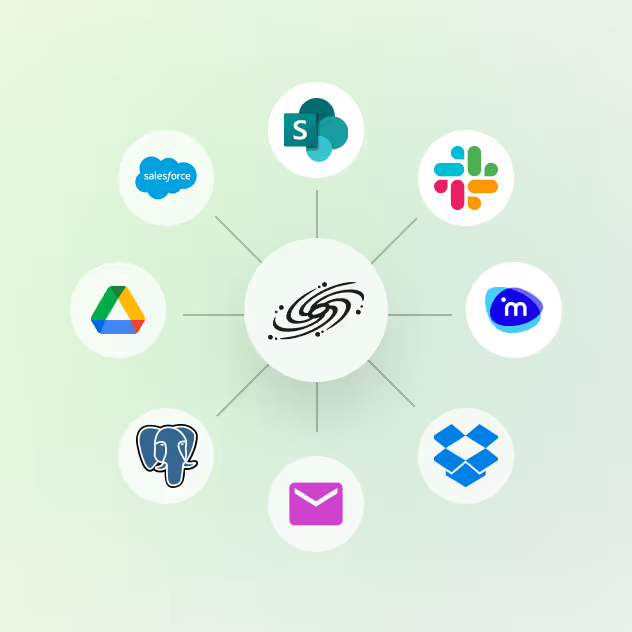
SWIRL addresses this by acting as a unified search layer across your entire data ecosystem. Instead of requiring workers to navigate separate interfaces for SharePoint, Salesforce, Confluence, email, databases, and more, SWIRL provides a single point of access. One query. All sources. Ranked results that surface what actually matters.
Search That Adapts to How People Work
SWIRL doesn't just consolidate access. It improves quality. Using AI-powered re-ranking, SWIRL surfaces the most relevant results from across all connected sources, reducing the time workers spend evaluating and discarding noise. It also supports conversational queries, meaning workers can search the way they think, not the way a system was designed to receive input.
The goal is to make search invisible: a capability that works so smoothly it stops being something workers think about and becomes simply the way information flows through the organization.