.png)

Data resides in numerous, often isolated, repositories within the vast expanse of modern enterprises. Employees need streamlined ways to unearth the insights hiding within this sprawling landscape. That’s where enterprise and federated search offer distinct approaches to centralizing access and driving efficient information discovery. Let’s break down these search philosophies and how Swirl Search bolsters both.
Enterprise Search: The Centralized Approach
In Essence
Enterprise search involves creating a massive, unified index of your organization’s data. This index is a comprehensive library catalog, encompassing everything from documents on file servers to email archives and customer records. When a user queries, the enterprise search engine consults this index for results.
Pros of Enterprise Search
- Speed: Centralization boosts response times, as searches happen through a single index.
- Broader Relevance: Searches encompass your entire indexed data universe.
- Consistency: Uniform results regardless of where the original data lives.
⠀Cons of Enterprise Search
- Upfront Investment: Indexing vast data may demand significant time and resources.
- Data Silos: This may become outdated if new data sources or updates aren’t continually added to the central index.
- Security Considerations: Sensitive data in the central index demands careful attention to access controls and permissions.
Federated Search: Real-Time Querying
Fundamentals
In contrast to a single, massive index, federated search queries various data sources in real time. Picture it as a librarian sending requests to numerous libraries at once, gathering results as they respond. It leaves your data where it is and eliminates the need for a mammoth central index.
Pros of Federated Search
- Agility: Handles new data sources effortlessly, offering rapid results.
- Dynamic Results: Captures up-to-the-minute updates as it taps into live data.
- Decentralized Control: Easier to manage security; data remains primarily under the purview of its source systems.
⠀Cons of Federated Search
- Slower Speed: Real-time queries affected by slowest source.
- Inconsistent Ranking: Data sources have their own definition of relevancy.
- Complexity: Can introduce technical challenges in orchestrating queries across disparate systems.
⠀When to Choose Which?
The optimal choice depends on your unique needs:
- Enterprise Search Excels When: You prioritize a unified view that is always pre-indexed for maximum search speed and consistent ranking.
- Federated Search Shines When: Handling numerous, changing data sources is crucial, and ensuring instant access to the absolute latest information outweighs search speed.
Swirl Search: Flexibility for Both Approaches
Swirl Search offers the power to choose the method that best suits your ever-evolving business and technical landscape.
- Swirl for Enterprise Search: Establish a secure, unified index across various data sources and leverage AI-driven intelligence for hyper-relevant results, ranking personalization, and intuitive discovery.
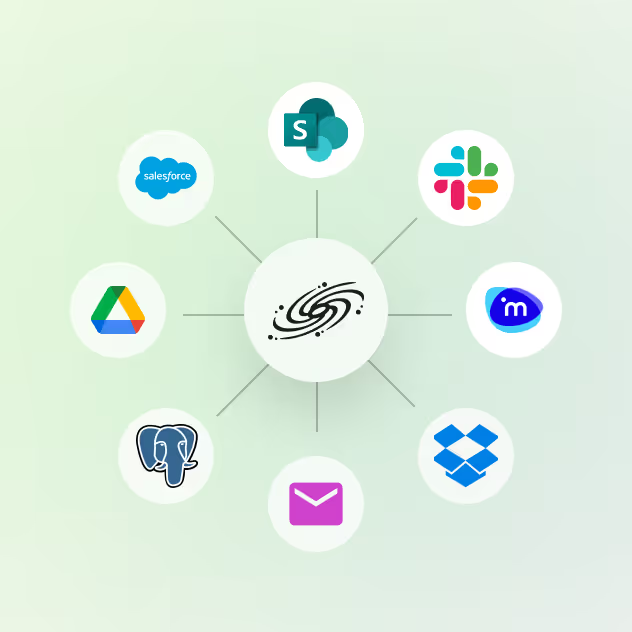
- Swirl for Federated Search: Connect real-time search experiences to disparate silos, empowering users to find precisely what they need wherever it may reside – be it fresh insights from the latest sales report or deep within complex engineering documentation.
In Conclusion
The choice between enterprise search and federated search rests on your organization’s data ecosystem, security needs, and emphasis on agility or unified results. Both can enhance data accessibility and improve employee productivity—Swirl Search allows you to adapt your search strategy and seamlessly embrace each approach’s benefits.