.png)
The End of Data Remodeling? How to Develop AI Agents Faster, Cheaper, and More Securely
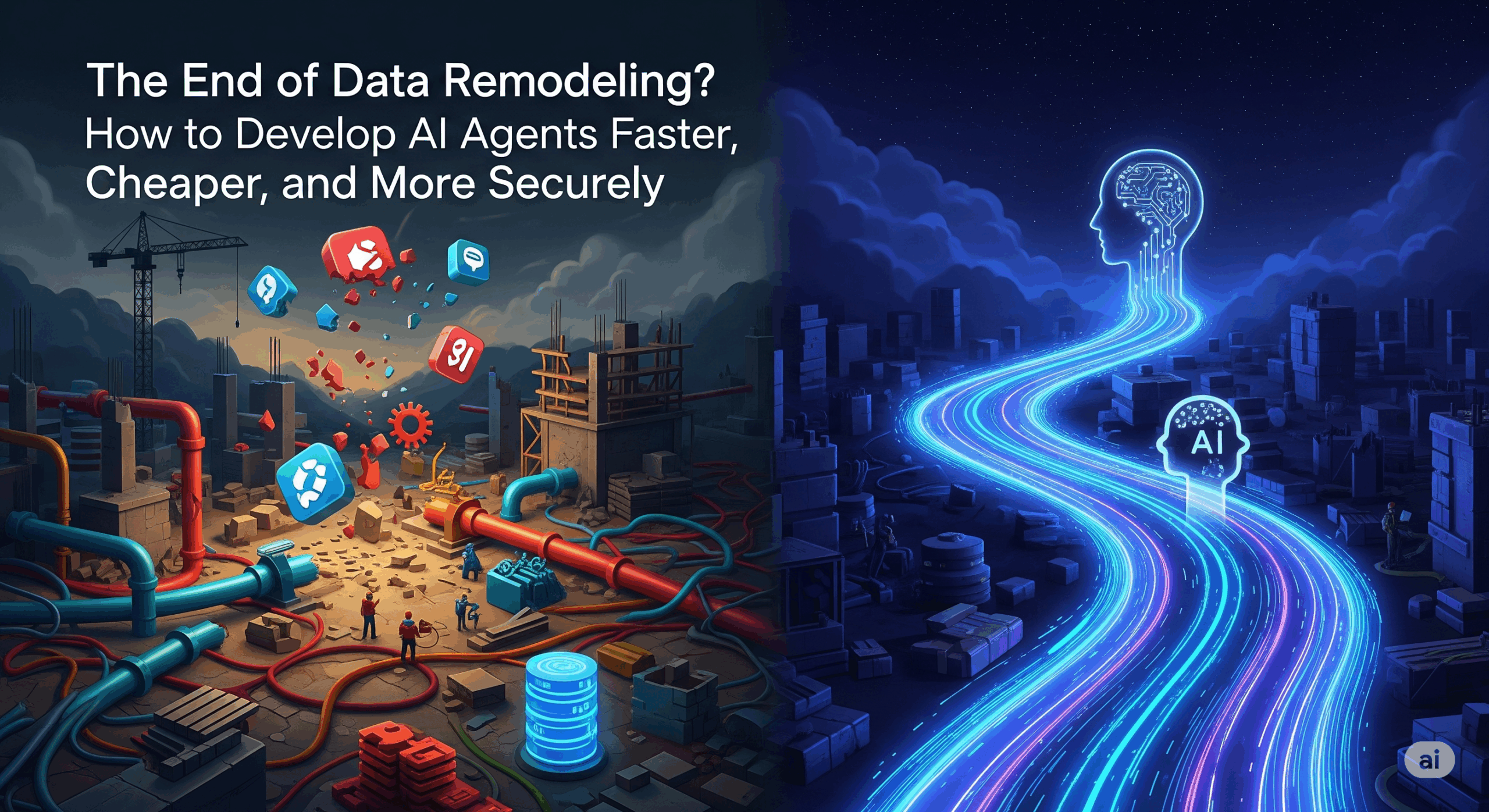
ETL and other data remodeling projects are quite possibly the biggest blockers of AI agent development. According to BCG, 74% of organizations struggle to achieve value from their AI initiatives, only 4% have developed truly cross-functional AI capabilities, and 29% of AI agent projects missed deadlines in 2024.
AI agents are only as good as the data they can access. Therefore, if you want to create useful AI agents, you need to give them easy, reliable, and fast access to trustworthy data. Unfortunately, organizations are not set up to give agents that access. Data is fragmented across departments and technologies, including many legacy technologies.
Is Remodeling Really Necessary?
A Zero-ETL approach to agent development gives agents access to data without having to redesign your technology infrastructure just to get started. Zero-ETL reduces risk by leaving data in place, minimizing upfront costs and prep work, and avoiding major remodeling. It lets you start agent development sooner, significantly reduce the costs of failure, and focus on agent development, not on tuning ETL pipelines.
Zero-ETL is also more secure than data centralization. Rather than create an attractive attack target with yet another security protocol to manage, many Zero-ETL solutions can integrate into your existing security.
Zero-ETL AI Search Enables Agents
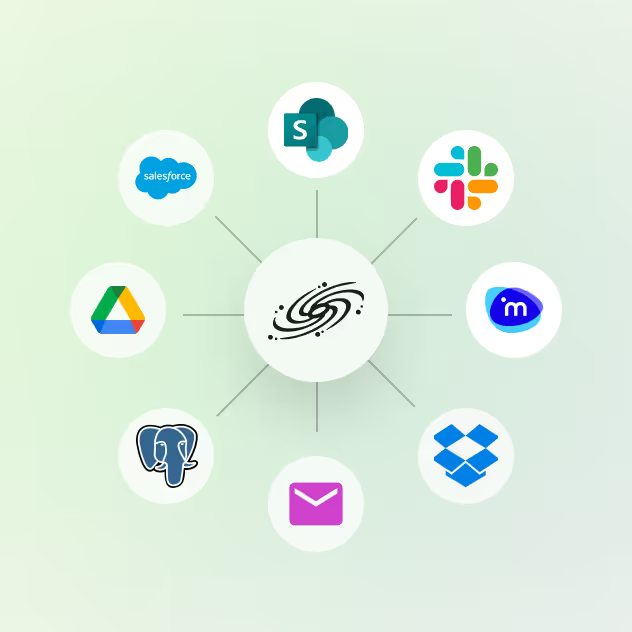
AI Search built with a Zero-ETL approach is how we put an end to data remodeling projects and give agents the data they need. Middleware such as SWIRL AI Search sits between AI and data, providing universal connectivity and intelligent search capabilities. SWIRL connects to over 100 applications and simultaneously searches all connected sources in response to a query.
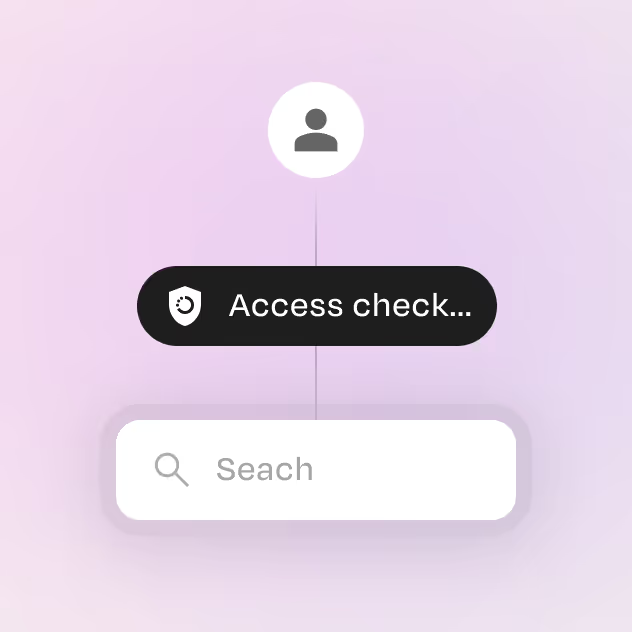
SWIRL integrates with existing security, so your existing enterprise security, privacy, and access policies are automatically applied. Users and agents can only search the data locations they are allowed to access. Because SWIRL leaves data in place and manages all communication with the AI, the AI only sees the data that is relevant to the question at hand.
Forget the Remodel
There is no question that AI agents need access to data to be worthwhile. The only question is how we give them that access: do we engage in a massive remodeling effort to centralize data, or do we go with a solution that leaves data in place, avoids the time and risks of remodeling, and lets us focus on agent development, not data management? SWIRL can be up and running in days, not months.